Structural Drying and Dehumidification in Texas
Air movers, dehumidifiers and moisture mapping until the building is dry.
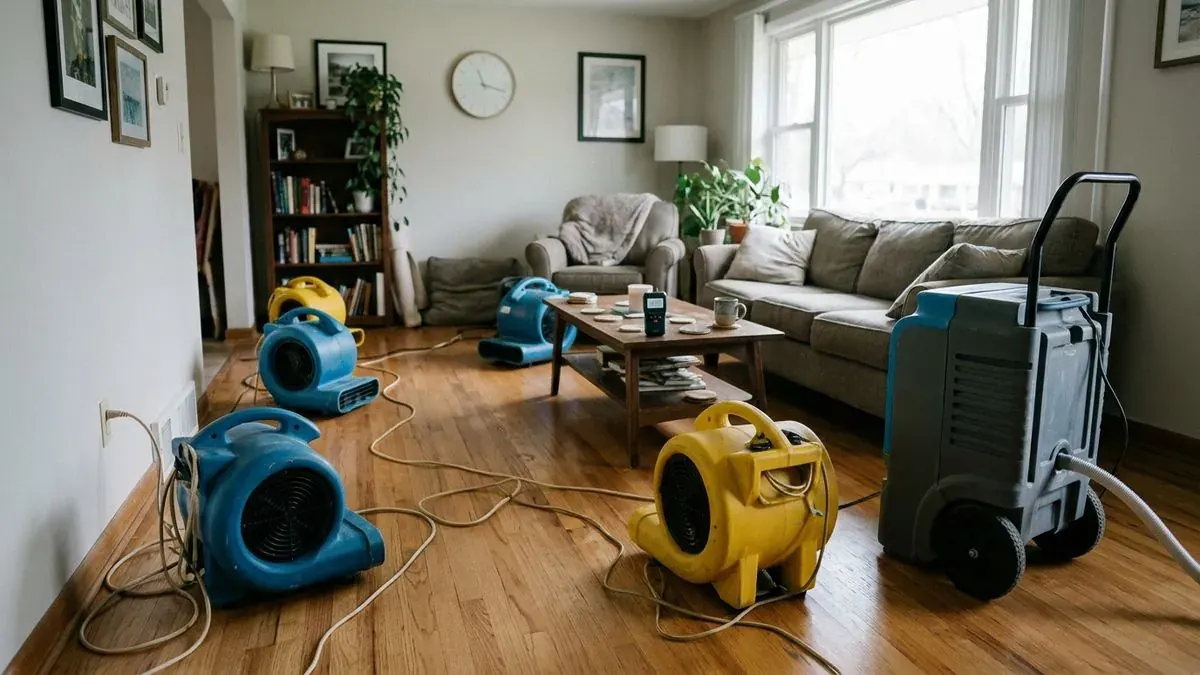
Illustration of a typical loss, not a photo of a real job.
Structural Drying and Dehumidification: What You Need to Know
Water damage is not over when the standing water is gone. Moisture stays in framing, subfloor, insulation and the back of drywall. Drying uses controlled airflow and dehumidification to pull moisture out of these materials, and moisture meters and thermal cameras confirm progress.
Daily readings tell the crew when to move equipment and when the structure is dry. A drying plan follows the type of materials, the temperature and humidity inside and the class of water damage. Texas humidity makes dehumidification critical, especially on the Gulf Coast and in East Texas.
This page covers one part of our water damage restoration near you in Texas service. If you are not sure it is the right fit, the homepage explains how the whole process works from first call to final readings.
Signs You May Need This Service
- Damp walls long after water removal
- High indoor humidity after a leak
- Cupping or warping floors
- A persistent musty smell
- Moisture readings that stay high
Mistakes That Make It Worse
- Turning off equipment early
- Opening windows in humid weather
- Using home fans in place of drying equipment
- Rebuilding before readings are normal
What Happens, Step by Step
- Moisture mapping shows the wet area
- Air movers and dehumidifiers are placed
- The crew checks readings daily
- Equipment is moved as areas dry
- Wet materials that will not dry are removed
- Final readings confirm the structure is dry
How This Varies Across Texas
Dry West Texas dries quickly. Humid Houston, Galveston, the Valley and East Texas need more dehumidification and longer drying times. A written drying log is useful for insurance claims.
What Affects the Cost
Cost depends on the size of the affected area, the number of pieces of equipment and the number of days. A drying log shows what ran and when.
We do not quote prices for the independent company. Read what changes the price.
Where This Service Is Requested Most
Help is available across Texas. These city guides explain the local causes and ZIP codes:
Not on the list? See all Texas service areas or check your ZIP code.
Related Services
Wet Floor and Hardwood Drying
Drying wet hardwood, laminate, tile and carpet before they cup, buckle or rot.
Learn more →Water Extraction
Pumping out standing water and pulling moisture from carpet, pad and floors.
Learn more →Mold Inspection and Testing
Moisture mapping, sampling and a written plan before any removal.
Learn more →Structural Drying and Dehumidification Questions
How Long Does Structural Drying Take?
Usually three to five days, longer for thick materials and humid weather.
Why Does Equipment Stay so Long?
Moisture inside walls and subfloors dries slowly. Readings, not appearance, decide when it is done.
Is the Noise Normal?
Yes. Air movers and dehumidifiers are loud and run around the clock.
Will Drying Raise My Electric Bill?
Yes, modestly. Ask your insurer about covering it.
Who does the work: Water Damage Restoration Texas is an independent connection service and is not the contractor. The independent company that arrives sets its own pricing, licenses, insurance and terms and does the work. See our referral disclosure.
Water Damage Right Now?
Call and give your ZIP code, what happened and whether water is still flowing. We connect you with an independent local company that covers your area.
Where to Verify What You Read Here
Our guides are written for Texas conditions, and they point to public sources so you can check the basics yourself. These sites are independent of us.
- IICRC. The standards body behind the S500 water damage restoration standard.
- Texas Department of Insurance. Consumer help with homeowners claims and complaints in Texas.
- U.S. Environmental Protection Agency: Mold. Federal guidance on mold, moisture and cleanup in the home.