Wet Floor and Hardwood Drying in Texas
Drying wet hardwood, laminate, tile and carpet before they cup, buckle or rot.
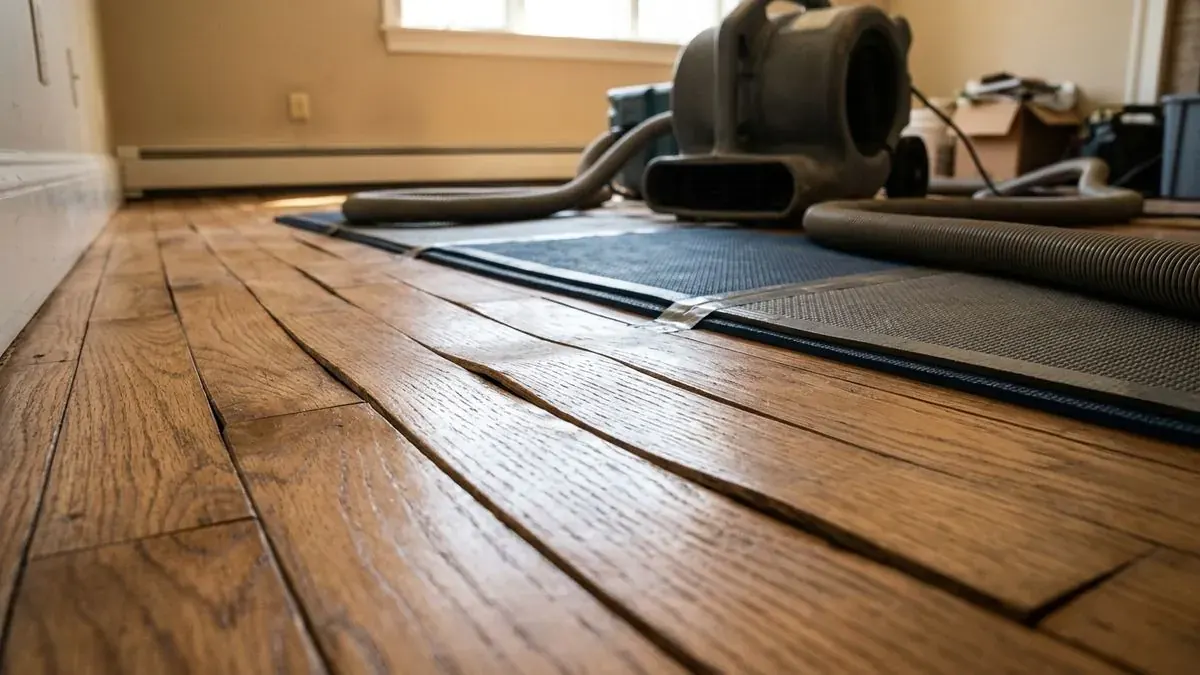
Illustration of a typical loss, not a photo of a real job.
Wet Floor and Hardwood Drying: What You Need to Know
Hardwood absorbs water and swells. Cupping means the edges rise above the center, and buckling means boards lift off the subfloor. The subfloor and any underlayment also hold water, so surface dry does not mean dry.
Floor drying uses mats and ports to pull moisture through the boards, along with dehumidifiers to take that moisture out of the air. Laminate swells at the edges and is often replaced. Tile survives but the subfloor and grout may need drying. Carpet can usually be dried if the water was clean, and pad is replaced.
This page covers one part of our water damage restoration near you in Texas service. If you are not sure it is the right fit, the homepage explains how the whole process works from first call to final readings.
Signs You May Need This Service
- Boards that cup or crown
- Gaps or buckled planks
- Dark spots or stains under finish
- Soft spots at the edge of a wet area
- A musty smell from beneath flooring
Mistakes That Make It Worse
- Sanding or refinishing too soon
- Covering wet flooring with rugs
- Using heat guns to speed drying
- Pulling up floors without a moisture plan
What Happens, Step by Step
- Remove standing water and furniture
- Measure moisture in boards and subfloor
- Place drying mats and dehumidifiers
- Check readings daily
- Remove material that cannot be saved
- Refinish or replace only after moisture is normal
How This Varies Across Texas
Slab leaks in Houston and Dallas, AC leaks in the Valley and roof leaks after hail all end up under hardwood across Texas. Humid regions need dehumidification beside the mats, and dry regions dry faster.
What Affects the Cost
Cost depends on square footage, flooring type, equipment and number of days. Saving a floor costs less than replacing it, if drying starts early.
We do not quote prices for the independent company. Read what changes the price.
Where This Service Is Requested Most
Help is available across Texas. These city guides explain the local causes and ZIP codes:
Not on the list? See all Texas service areas or check your ZIP code.
Related Services
Structural Drying and Dehumidification
Air movers, dehumidifiers and moisture mapping until the building is dry.
Learn more →Slab Leak Water Damage
Hidden leaks under a concrete slab that soak floors, baseboards and subfloors.
Learn more →Water Extraction
Pumping out standing water and pulling moisture from carpet, pad and floors.
Learn more →Wet Floor and Hardwood Drying Questions
Can Hardwood Be Saved After Water Damage?
Often, if drying starts within a day or two and the water was clean.
How Long Does It Take?
Often a week or more for solid hardwood.
What Is Cupping?
When the edges of boards rise because the underside is wetter than the top.
Will Floors Flatten Once Dry?
Often partly. Some cupping resolves, and some needs sanding.
Who does the work: Water Damage Restoration Texas is an independent connection service and is not the contractor. The independent company that arrives sets its own pricing, licenses, insurance and terms and does the work. See our referral disclosure.
Water Damage Right Now?
Call and give your ZIP code, what happened and whether water is still flowing. We connect you with an independent local company that covers your area.
Where to Verify What You Read Here
Our guides are written for Texas conditions, and they point to public sources so you can check the basics yourself. These sites are independent of us.
- IICRC. The standards body behind the S500 water damage restoration standard.
- Texas Department of Insurance. Consumer help with homeowners claims and complaints in Texas.
- U.S. Environmental Protection Agency: Mold. Federal guidance on mold, moisture and cleanup in the home.