Flood Damage Cleanup Across Texas
Cleanup, removal and drying after rising water enters a Texas home or business.
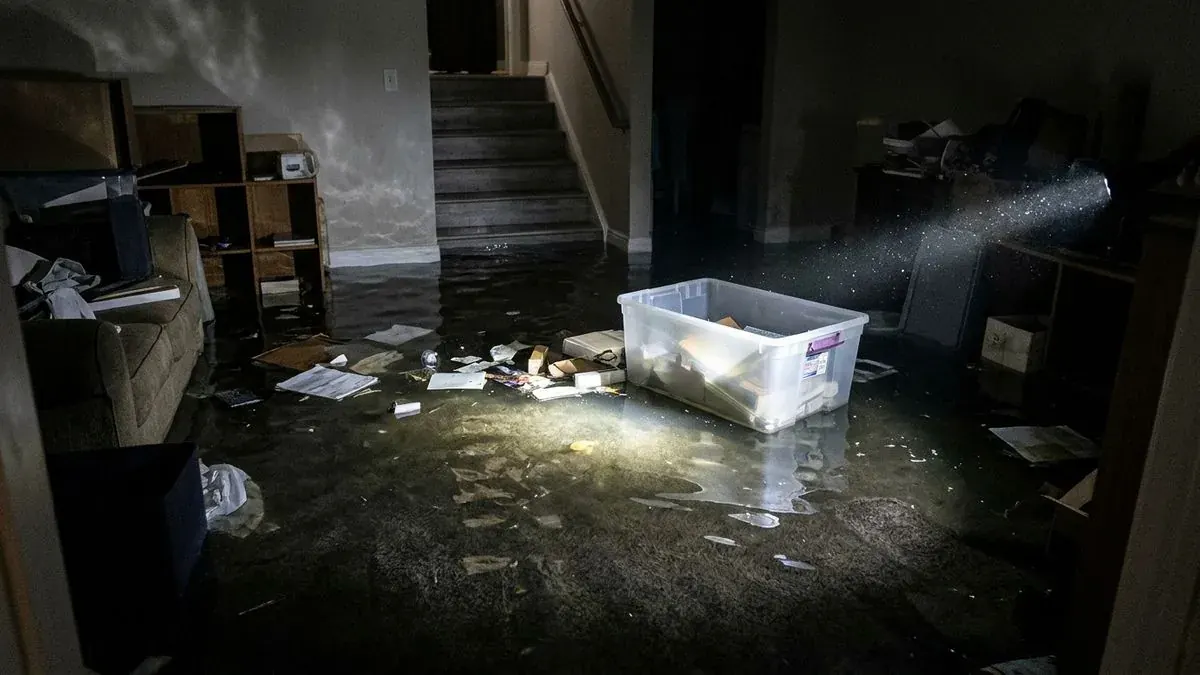
Illustration of a typical loss, not a photo of a real job.
Flood Damage Cleanup: What You Need to Know
Flooding is one of the most frequent disasters in Texas. Flash floods fill Hill Country creeks in an hour, coastal storms push surge inland and slow moving tropical rain drowns flat cities like Houston and the Rio Grande Valley.
Floodwater carries sewage, soil, fuel and bacteria, so drywall, insulation, carpet and pad that it touched are removed, and framing and concrete are cleaned and dried. Cleanup follows a sequence: safety, water removal, debris and wet material removal, cleaning, drying and a final moisture check before any rebuild.
This page covers one part of our professional water damage restoration in Texas service. If you are not sure it is the right fit, the homepage explains how the whole process works from first call to final readings.
Signs You May Need This Service
- Water entered from outside, through doors, vents or the foundation
- Brown or gray water on the floor
- Silt or mud residue on walls and floors
- A sewage smell after the water recedes
- Wet insulation inside walls
Mistakes That Make It Worse
- Walking through floodwater, which can hide electrical and sharp hazards
- Keeping wet drywall or insulation in place
- Using fans before contaminated materials are removed
- Assuming homeowners insurance covers flood
What Happens, Step by Step
- Do not enter until power is off and the structure is safe
- Photograph everything for your flood insurer or FEMA
- The crew pumps out water and removes contaminated materials
- Surfaces are cleaned and sanitized
- Drying equipment runs until moisture readings reach normal
- Mold inspection is considered before rebuilding
How This Varies Across Texas
Flash floods in the Hill Country and Austin, bayou and surge flooding around Houston and Galveston, river flooding around Waco and Sugar Land and monsoon runoff in El Paso all leave different debris and different timelines. Standard homeowners policies usually exclude flood, so check for separate flood coverage.
What Affects the Cost
Cost depends on water depth, how long water stayed, how much of the structure was contaminated and how many materials were removed. Written scopes help when you deal with an insurer or a federal program.
We do not quote prices for the independent company. Read what changes the price.
Where This Service Is Requested Most
Help is available across Texas. These city guides explain the local causes and ZIP codes:
Not on the list? See all Texas service areas or check your ZIP code.
Guides Worth Reading
Related Services
Storm, Hail and Hurricane Water Damage
Cleanup after hail, wind, tropical storms and hurricanes.
Learn more →Sewage Backup Cleanup
Safe cleanup after sewage backs up into a home or business.
Learn more →Mold Removal and Remediation
Containment, removal and cleanup of mold after water damage, including black mold.
Learn more →Flood Damage Cleanup Questions
Is Floodwater Category 3?
Floodwater is generally treated as category 3, meaning grossly contaminated, because it carries sewage, soil and chemicals.
Does Homeowners Insurance Cover Flood?
Usually not. Flood coverage is a separate policy, often through the National Flood Insurance Program or a private insurer.
Can Drywall Be Saved After a Flood?
Not usually. Drywall that wicked up floodwater is typically cut out and replaced.
How Soon Should Cleanup Start?
As soon as it is safe. Mold can begin within 24 to 48 hours.
Who does the work: Water Damage Restoration Texas is an independent connection service and is not the contractor. The independent company that arrives sets its own pricing, licenses, insurance and terms and does the work. See our referral disclosure.
Water Damage Right Now?
Call and give your ZIP code, what happened and whether water is still flowing. We connect you with an independent local company that covers your area.
Where to Verify What You Read Here
Our guides are written for Texas conditions, and they point to public sources so you can check the basics yourself. These sites are independent of us.
- FloodSmart by FEMA. How flood insurance works and how it differs from a homeowners policy.
- National Weather Service. Official watches, warnings and forecasts for your county.
- CDC: Cleaning Up After a Flood. Health and safety guidance for flooded homes, including contaminated water.