Why It Takes Days, Not Hours
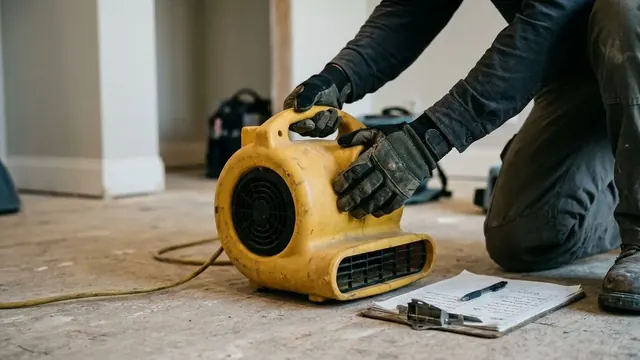
Water moves into framing, subfloor and the back of drywall. Evaporation from these materials is slow, and the air must be kept dry enough to take the moisture. Dehumidifiers and air movers speed the process but cannot skip the physics.
What Speeds or Slows Drying
Temperature, humidity and airflow matter. Houston and the Gulf Coast hold more moisture in the air, so drying takes longer than in West Texas. Hardwood, plaster and concrete dry slowly. Carpet and drywall dry faster.
How a Crew Knows It Is Dry
Moisture meters and thermal cameras measure readings against a dry standard from the same material elsewhere in the building. Daily logs show progress. Dry to the touch does not mean dry.
What You Can Do
Keep equipment running, keep windows closed in humid weather and avoid unplugging equipment. Ask for daily readings.
What Dry Means
A crew compares readings in the wet area against a dry reference taken from the same material in an unaffected part of the building. The goal is to return to that reference, not to hit one universal number, because wood, drywall and concrete all have different normal readings.
What a Drying Log Should Show
Each day: the date, the temperature and humidity, readings at each marked spot, and the number and position of air movers and dehumidifiers. If the company cannot show that, ask why. The log also helps with insurance.
When Drying Takes Longer
Double layer floors, wet insulation inside closed walls, concrete slabs, crawl spaces and humid weather all add days. Sometimes the faster path is removing the material, such as a section of wet baseboard or drywall, so the cavity behind it can dry.
This guide supports our professional water damage restoration in Texas service. If you need help now, call (833) 322-9204.